

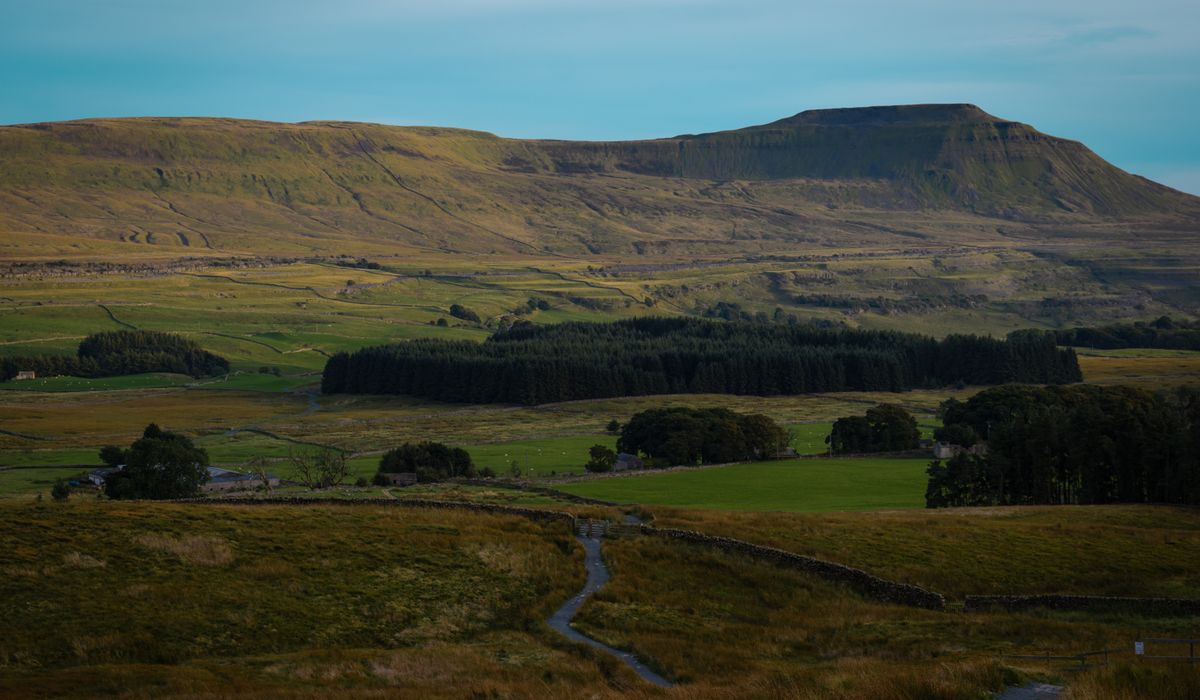
Start with the Valley Floor
The finest introduction to the dales is not a summit. It is a slow loop along a river, out through a couple of field gates, and back to the village green in time for tea. Valley-floor routes give you the things that make these landscapes so rewarding — drystone walls, hay meadows, old field barns and the sound of water — without demanding a strenuous climb or a head for exposure. If you are new to the area, or walking with family, or simply want a day that ends with your legs still speaking to you, low-level is the sensible choice.
As a rough guide, look for circuits of four to six miles with less than 120 metres of ascent. Riverside paths, dismantled railway lines now used as footpaths, green lanes and quiet bridleways all fit the bill. These routes tend to stay below the open moorland, which means better shelter, firmer ground and far more places to sit down.
Choosing a Circuit That Suits the Day
Before you commit, ask a few honest questions about the ground underfoot and the time you actually have. A route that looks modest on paper can double in effort after a wet week.
- Distance and ascent: a four-mile loop with a single stiff pull up to a barn is a different outing from four flat miles beside a river.
- Stiles and gates: count them if your map or guide lists them. Six stiles is nothing; twenty is a workout, especially with a dog, a rucksack or small children.
- Ground conditions: limestone country drains quickly, millstone grit and clay hold water. Riverside meadows flood, and cattle churn gateways into a bog.
- Escape routes: a good circuit has at least one short cut back to the village if the weather turns or someone tires.
- Refreshments: a pub or village shop near the start is not a frivolity. It is planning.
Waymarkers, Walls and the Long Field Problem
Public footpaths in the dales are generally well signed, but the sign is often at the point where you leave the road and nowhere else. Yellow arrow discs mark footpaths, blue marks bridleways, and the acorn symbol indicates a long-distance trail. Fingerposts and stiles frequently carry a small disc with the route name on it.
The classic difficulty is the big field with no visible path across it. Waymarkers may only appear at the far side, so your job is to walk the line of the boundary wall, fence or hedge that the map shows, aiming for the gap or stile you can see in the distance. Where a faint trod exists, follow it; where it does not, keep a straight line between fences rather than wandering. A 1:25,000 map is genuinely useful here — the field boundaries are drawn, so you can match them to what is in front of you.
Allow Time for Stiles
This is the single most common mistake made by walkers new to the dales. Guidebook timings usually assume a steady pace on easy ground, and stiles, gates and squeeze gaps eat into that far more than people expect. Ladder stiles need a hand on the top rail, particularly in the wet. Kissing gates can be stiff. Some stiles are designed for walkers only; if you are with a dog, be ready to lift it, and check whether a bridleway alternative avoids the obstacle altogether.
A reasonable allowance is an extra five to ten minutes per mile over and above your normal walking speed. On a five-mile circuit with a dozen stiles and a couple of muddy gateways, that is the difference between a comfortable afternoon and a rushed one.
What to Carry on a Short Valley Route
Short and low-level does not mean unprepared. Phone signal in the dales is patchy at best, and a misjudged turn can add an hour.
- A paper map and compass, even for a three-mile loop, plus the ability to read a grid reference.
- Waterproof jacket and trousers — valley showers arrive quickly and the shelter of the walls works both ways.
- Footwear with grip, ideally boots with ankle support for rough pasture and stony tracks.
- Water and a snack, more than you think you need in summer.
- A charged phone in a dry bag, plus a small torch in winter.
- Sun cream and a hat in the open, and midge repellent near woodland and water in high summer.
- A lead and bags if you have a dog — livestock are present all year, and ground-nesting birds in spring.
- A little cash for car parks, honesty boxes and the village tearoom.
Timing, Weather and Knowing When to Turn Back
Plan around daylight rather than optimism. In winter, a four-mile valley walk can comfortably fill the usable hours, so start early. In summer, the opposite problem applies: heat and midges make early morning and late afternoon the pleasant windows.
Rain changes the dales fast. Rivers rise, stepping stones vanish under brown water, and a meadow that was firm at breakfast becomes a swamp by lunch. Set a turnaround time before you set off and stick to it. Tell someone where you are going and when you expect to be back, and if the path ahead looks genuinely impassable, turn around. The hill will still be there next week.
Then slow down and enjoy the rest of it. Notice the swallows over the river, the hay meadow wildflowers in June, the small stone barns that once sheltered cattle through winter. Close every gate behind you, keep dogs on leads around livestock, and take everything home. A gentle circular walk done well is one of the great simple pleasures of the British countryside — and the dales do it better than almost anywhere.


Coding is used in almost all aspects of life and work now, be it directly or indirectly. It’s not just for companies in the tech sector. “An increasing number of businesses rely on computer code,
Coding is used in almost all aspects of life and work now, be it directly or indirectly. It’s not just for companies in the tech sector. “An increasing number of businesses rely on computer code,
Coding is used in almost all aspects of life and work now, be it directly or indirectly. It’s not just for companies in the tech sector. “An increasing number of businesses rely on computer code,